Wellness1 min read
Anti-inflammatory foods: what the evidence says
Which foods are linked with lower inflammation, which are linked with more, and how to build an anti-inflammatory eating pattern.
Chronic low-grade inflammation is linked to many long-term health conditions. While no single food will "cure" inflammation, research suggests that overall eating patterns can make a difference.
Foods linked with lower inflammation
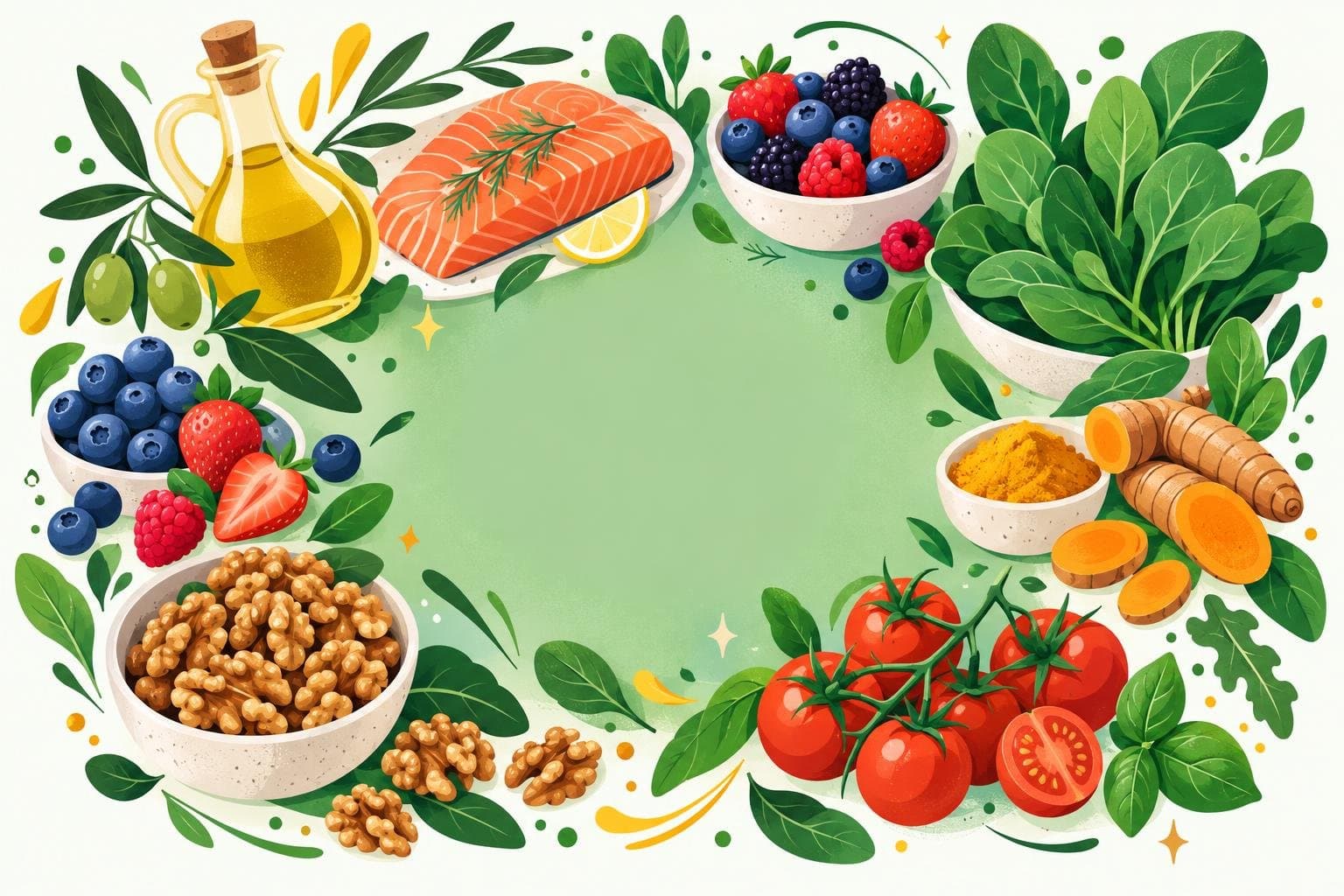
- Oily fish like salmon, mackerel and sardines
- Extra virgin olive oil
- Leafy greens and colourful vegetables
- Berries and other fruit
- Nuts, especially walnuts and almonds
- Beans, lentils and whole grains
- Herbs and spices like turmeric, ginger and garlic
Foods linked with more inflammation
- Ultra-processed foods and snacks
- Sugary drinks and refined carbohydrates
- Processed meats
- Fried foods
- Excess alcohol
The pattern matters most
The Mediterranean diet, rich in vegetables, olive oil, fish and whole grains, is one of the most studied anti-inflammatory eating patterns. It's the overall diet, not individual "superfoods", that seems to matter.
Simple swaps
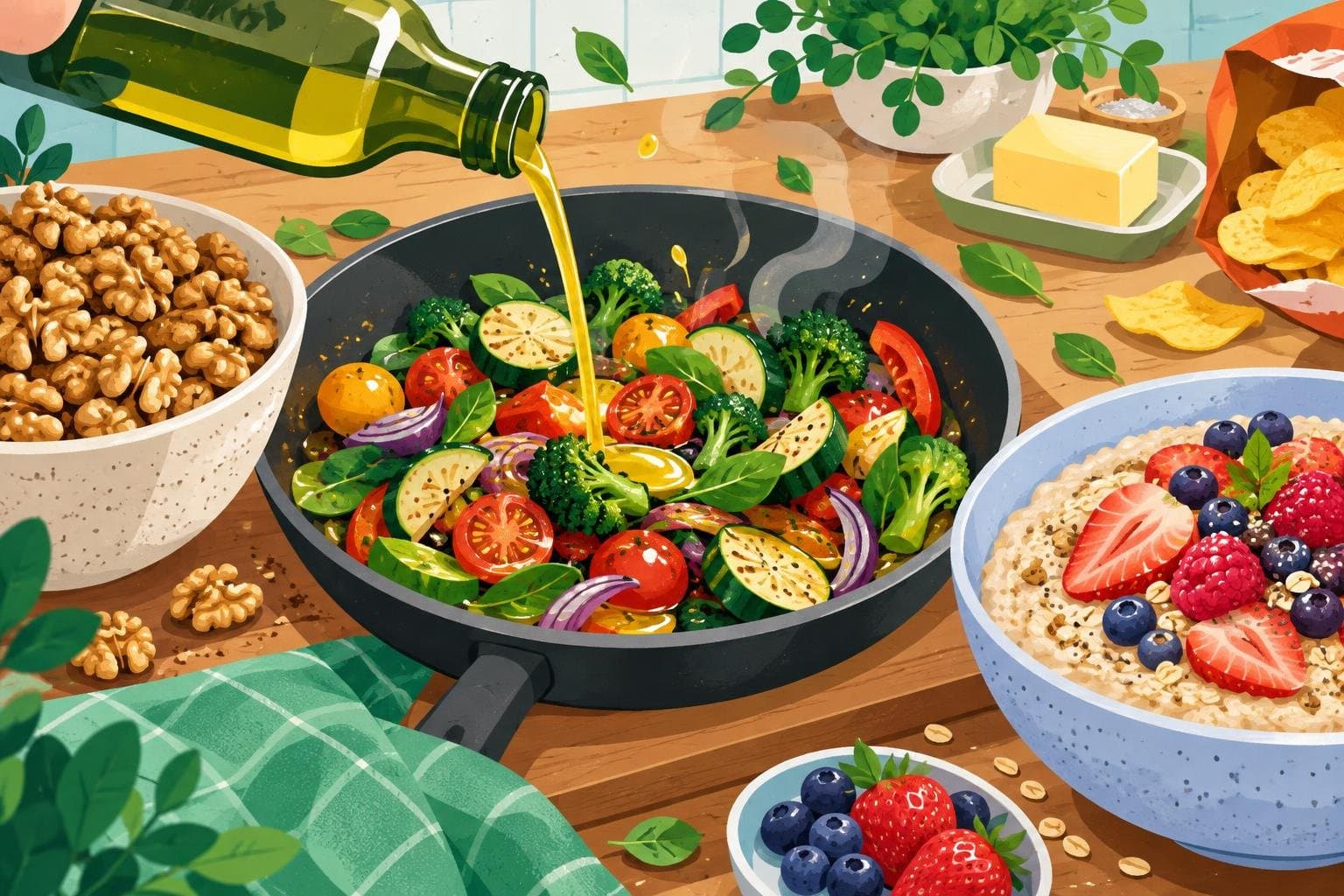
- Cook with olive oil instead of butter
- Swap one red-meat dinner a week for fish or beans
- Add a handful of berries to breakfast
- Snack on nuts instead of crisps
Lifestyle matters too
Sleep, exercise, stress management and not smoking all affect inflammation. Diet works best as part of a healthy lifestyle.
Plan a Mediterranean-style week
In Mealful, you can favour cuisines you love, like Mediterranean, and search recipes by ingredient to build a week rich in fish, beans and vegetables.
This article is general information, not medical advice. If you have a health condition or specific dietary needs, talk to a doctor or registered dietitian.