Meal planning2 min read
Freezer meal prep: cook once, eat for a month
Which meals freeze well, which don't, and how to pack, label and reheat them so a homemade dinner is always minutes away.
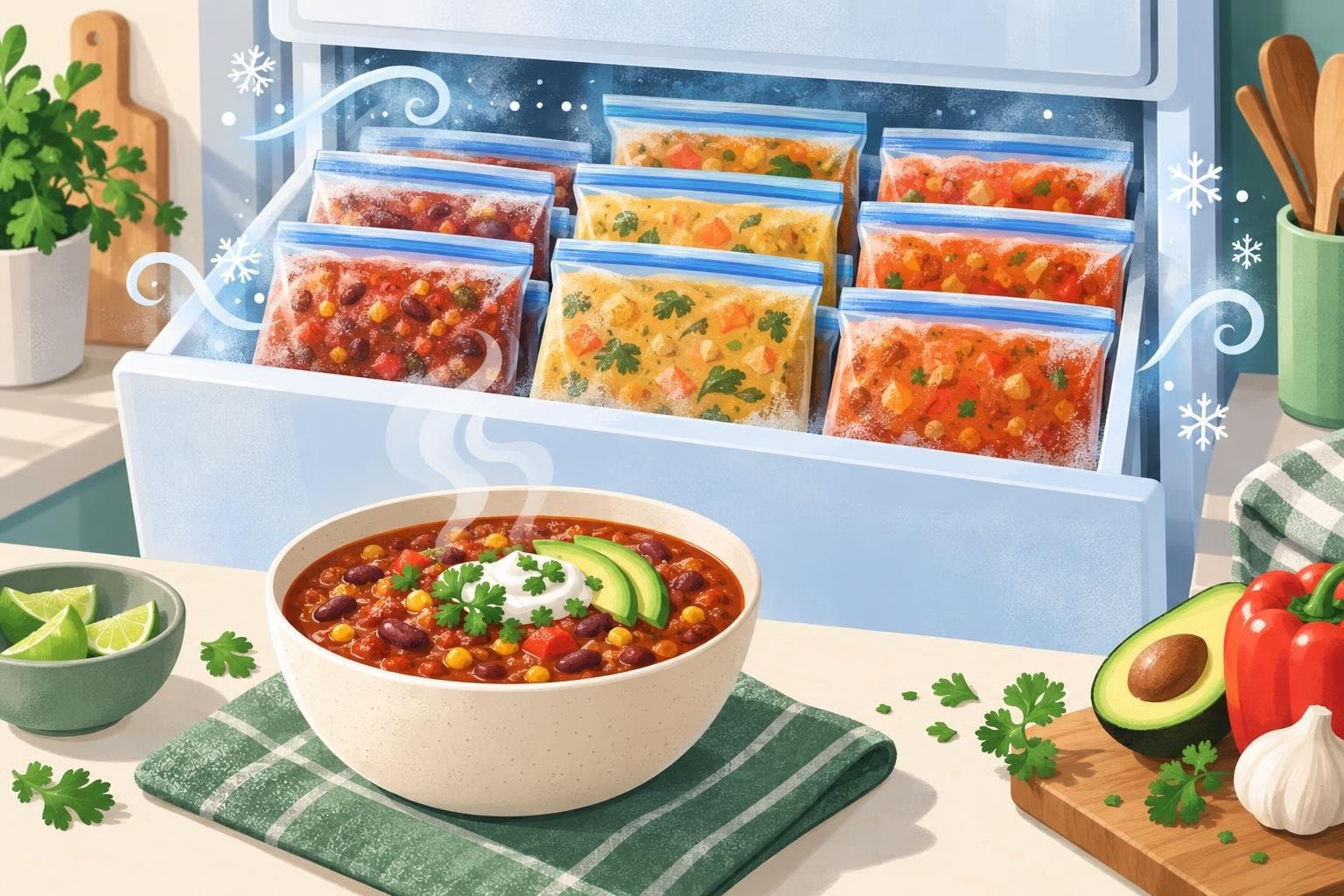
A well-stocked freezer is the best backup plan there is. On nights when you're tired, late or out of ideas, a homemade meal is just a reheat away. And making double batches costs almost no extra effort.
Meals that freeze well
- Soups, stews and chilli
- Curries and dals
- Pasta sauces, bolognese and ragù
- Meatballs, burgers and veggie patties
- Cooked grains like rice and quinoa
- Burritos, enchiladas and baked pasta dishes
- Muffins, pancakes and breakfast burritos
Foods that don't freeze well
- Salad leaves, cucumber and other watery raw vegetables
- Cream- and yoghurt-based sauces, which can split
- Cooked potatoes in soups, which can turn grainy
- Fried or crispy foods, which go soft
Pack it properly
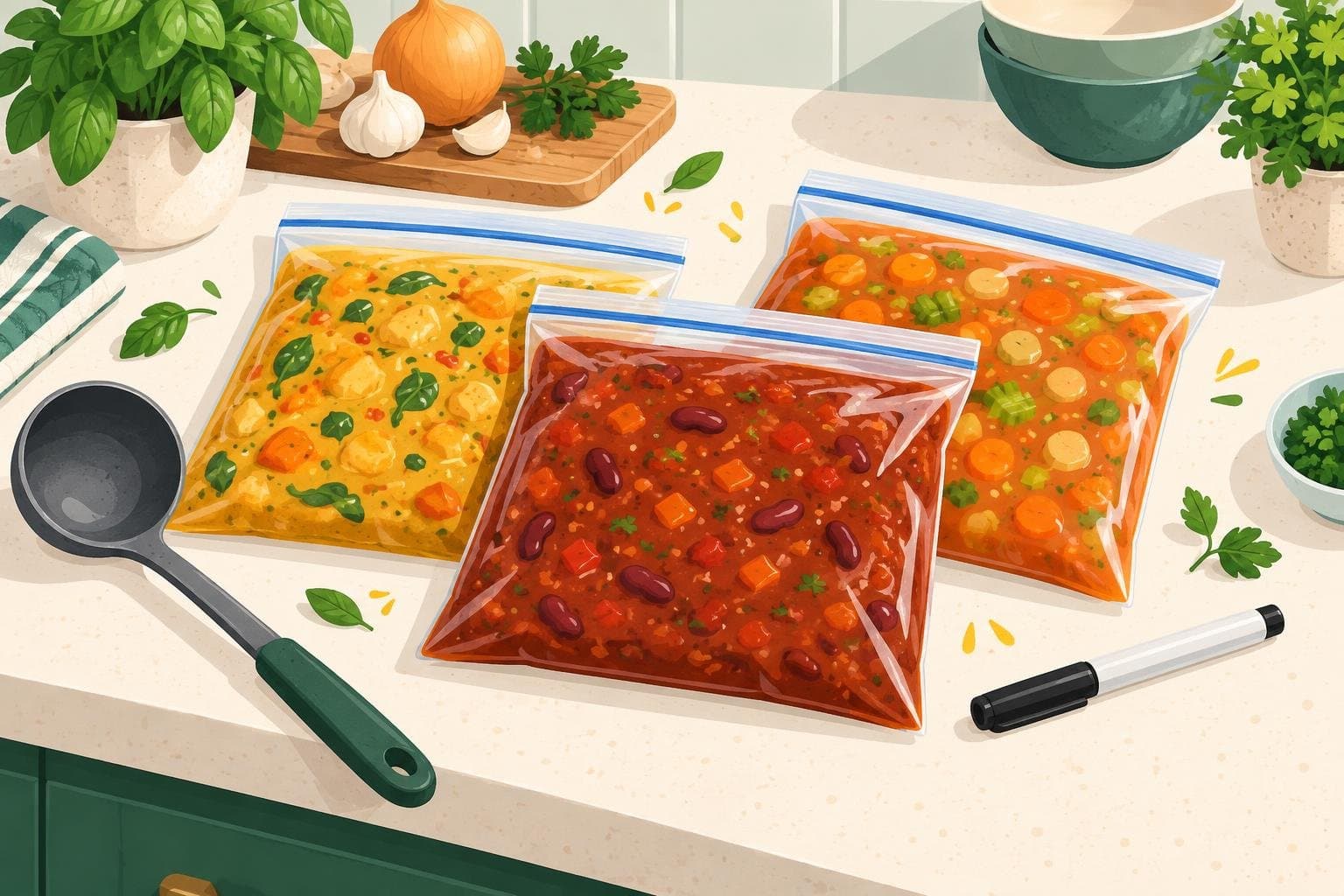
Cool food quickly and freeze it within a day or two of cooking. Portion it into the sizes you'll actually eat, whether single servings for lunches or family-sized trays for dinner. Squeeze the air out of freezer bags and lay them flat to freeze. Once solid, they stack like books and thaw much faster.
How long does it last?
Food kept frozen at -18°C (0°F) stays safe to eat, but quality slowly drops. Most cooked dishes taste best within two to three months. Use older items first by putting new bags at the back.
Thaw and reheat safely
The safest way to thaw is overnight in the fridge. Soups and stews can often be reheated straight from frozen in a pan over low heat. Whatever method you use, reheat until the food is steaming hot all the way through, and don't refreeze leftovers that have already been thawed and reheated.
Plan your double batches
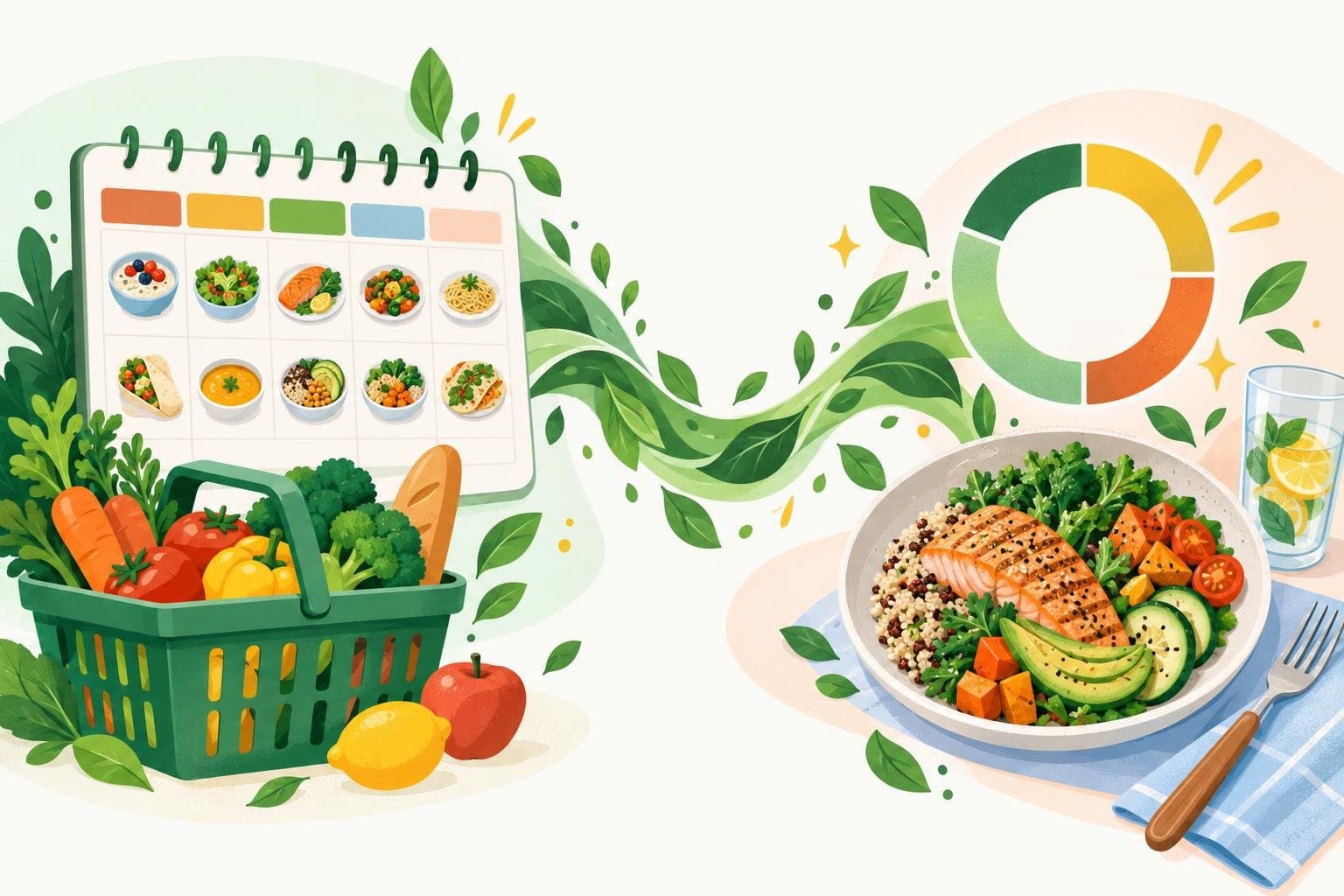
The easiest way to build a freezer stash is to double a recipe you're already cooking. In Mealful, increase the servings on a dish in your plan and the grocery list updates automatically, so the extra portions are covered when you shop.
This article is general information, not medical advice. If you have a health condition or specific dietary needs, talk to a doctor or registered dietitian.