Nutrition2 min read
Foods for a healthy gut: a practical guide
Fibre, fermented foods and variety: what the research suggests about feeding your gut, and simple ways to put it on your plate.
Your gut is home to trillions of bacteria, often called the gut microbiome. Research into how they affect health is still developing, but a few dietary patterns come up again and again as helpful. The good news: none of them require expensive supplements.
Fibre: food for your gut bacteria
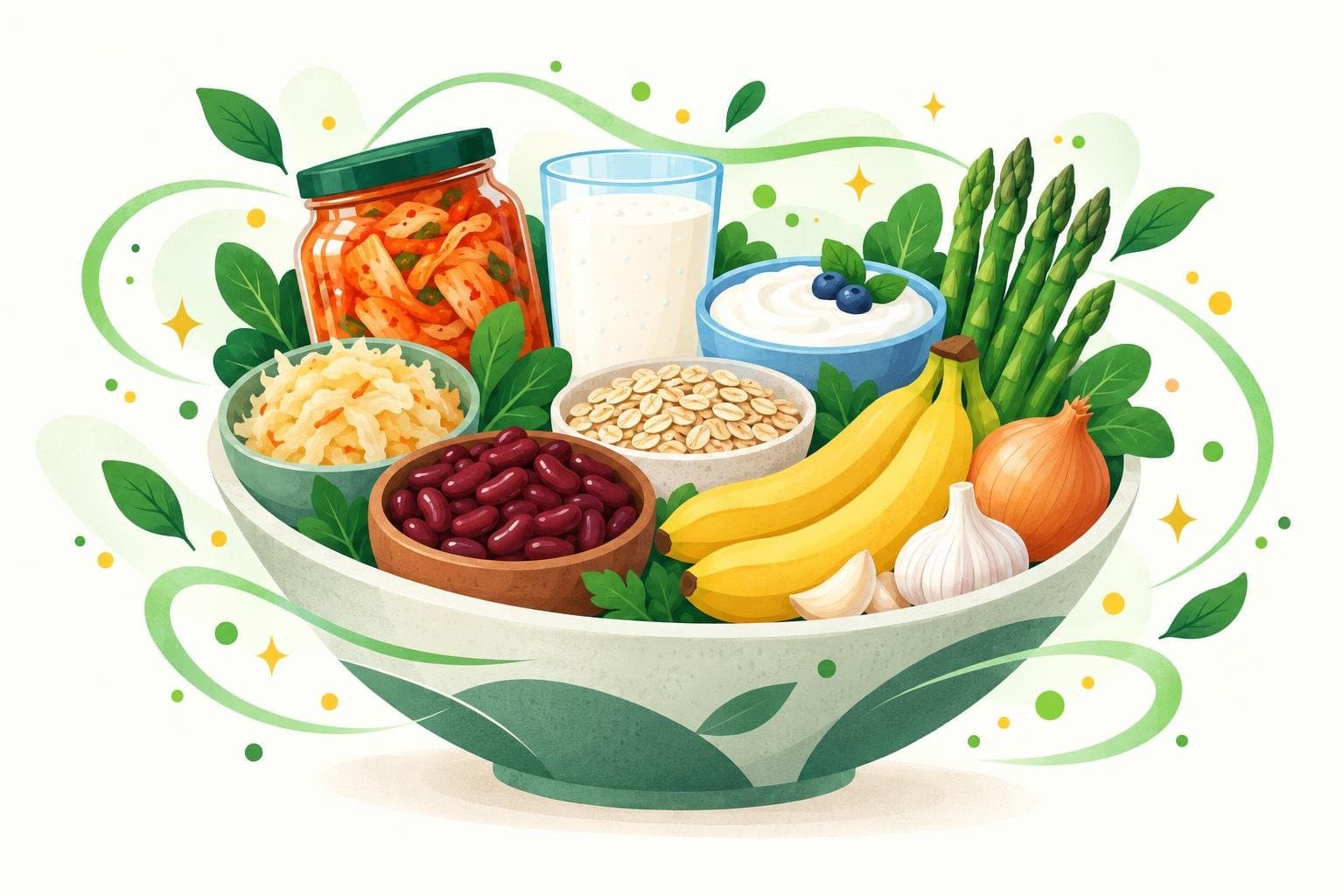
Many types of fibre pass through your stomach undigested and are fermented by bacteria in your large intestine. Beans, lentils, oats, whole grains, fruit and vegetables are all great sources. Some foods, like onions, garlic, leeks, asparagus, bananas and oats, contain types of fibre that are especially good at feeding beneficial bacteria.
Fermented foods
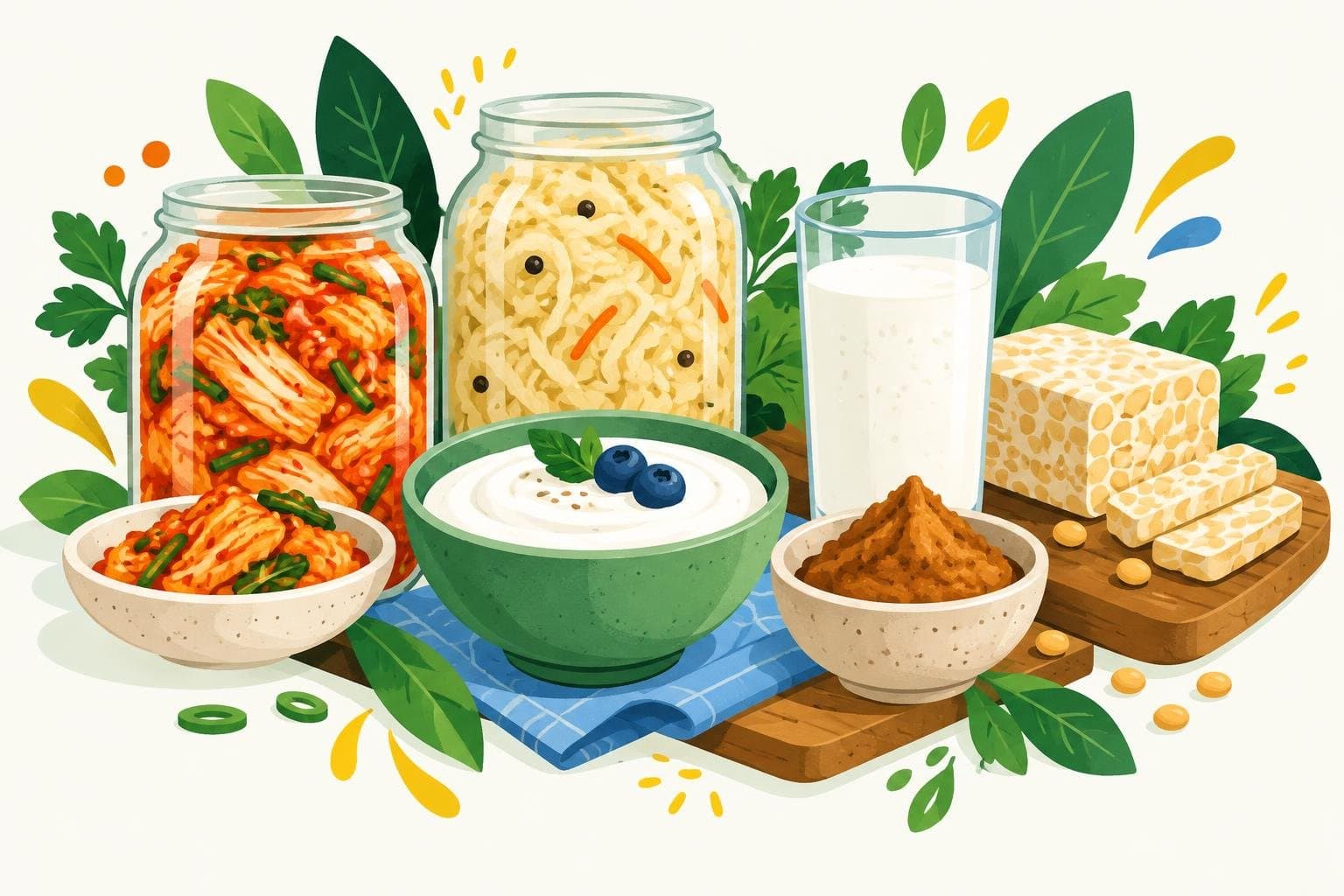
Fermented foods can contain live microbes. Studies suggest that eating them regularly may increase the diversity of gut bacteria. Look for:
- Plain yoghurt and kefir with live cultures
- Kimchi and sauerkraut (the refrigerated kind; shelf-stable versions are usually heat-treated)
- Miso and tempeh
- Kombucha, keeping an eye on the sugar content
Variety matters
Different bacteria thrive on different foods, and eating a wide range of plants is linked with a more diverse microbiome. Some researchers suggest aiming for around 30 different plant foods a week, counting vegetables, fruit, whole grains, beans, nuts, seeds, herbs and spices.
What to eat less of
Diets high in ultra-processed foods and low in fibre are associated with less diverse gut bacteria. You don't need to cut anything out completely; just let whole foods make up most of your plate.
Easy ways to start
- Add a spoon of yoghurt or kefir to breakfast
- Put a tin of beans into one dinner a week
- Top meals with a small serving of kimchi or sauerkraut
- Swap one refined grain for a whole grain each day
- Try one new vegetable or fruit each week
If you increase fibre a lot, do it gradually to avoid bloating. And if you have ongoing digestive symptoms, see a doctor rather than self-treating with diet changes.
Planning helps with variety. In Mealful, you can search recipes by ingredient, so it's easy to build a week that includes beans, whole grains and a wide range of vegetables.
This article is general information, not medical advice. If you have a health condition or specific dietary needs, talk to a doctor or registered dietitian.