Nutrition1 min read
Healthy fats: which ones to eat more of, and which to limit
Unsaturated, saturated and trans fats explained, with the best food sources and simple ways to get the balance right.
After decades of low-fat messaging, many people still feel nervous about eating fat. But fat is essential: it helps your body absorb vitamins A, D, E and K, supports cell health and keeps meals satisfying. The type of fat matters more than the total amount.
Unsaturated fats: eat more of these
Replacing saturated fat with unsaturated fat is linked with better heart health. There are two main kinds:
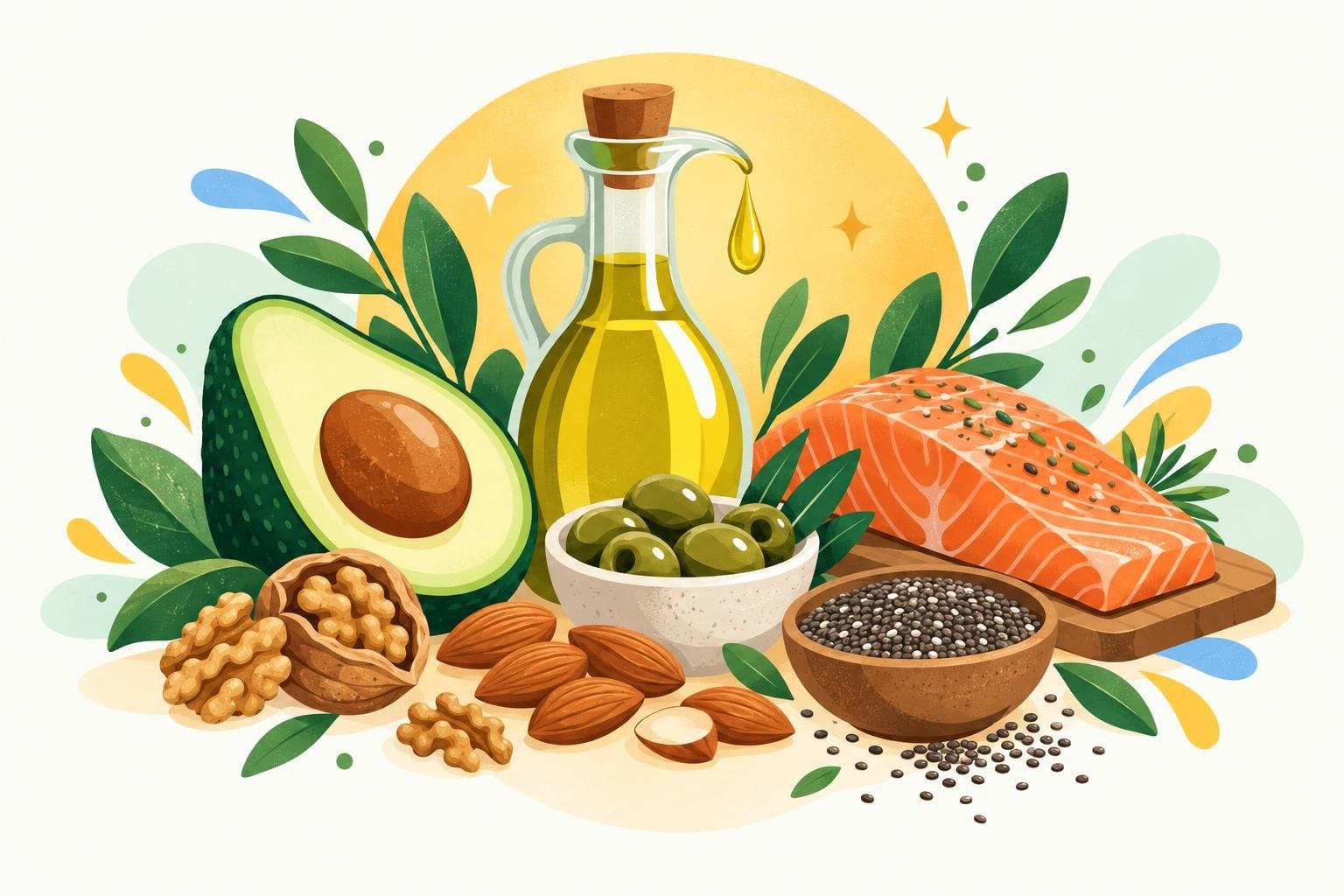
- Monounsaturated: olive oil, rapeseed (canola) oil, avocados, almonds, cashews, peanuts
- Polyunsaturated: walnuts, sunflower seeds, flaxseed, chia seeds, sunflower oil and oily fish
Omega-3s
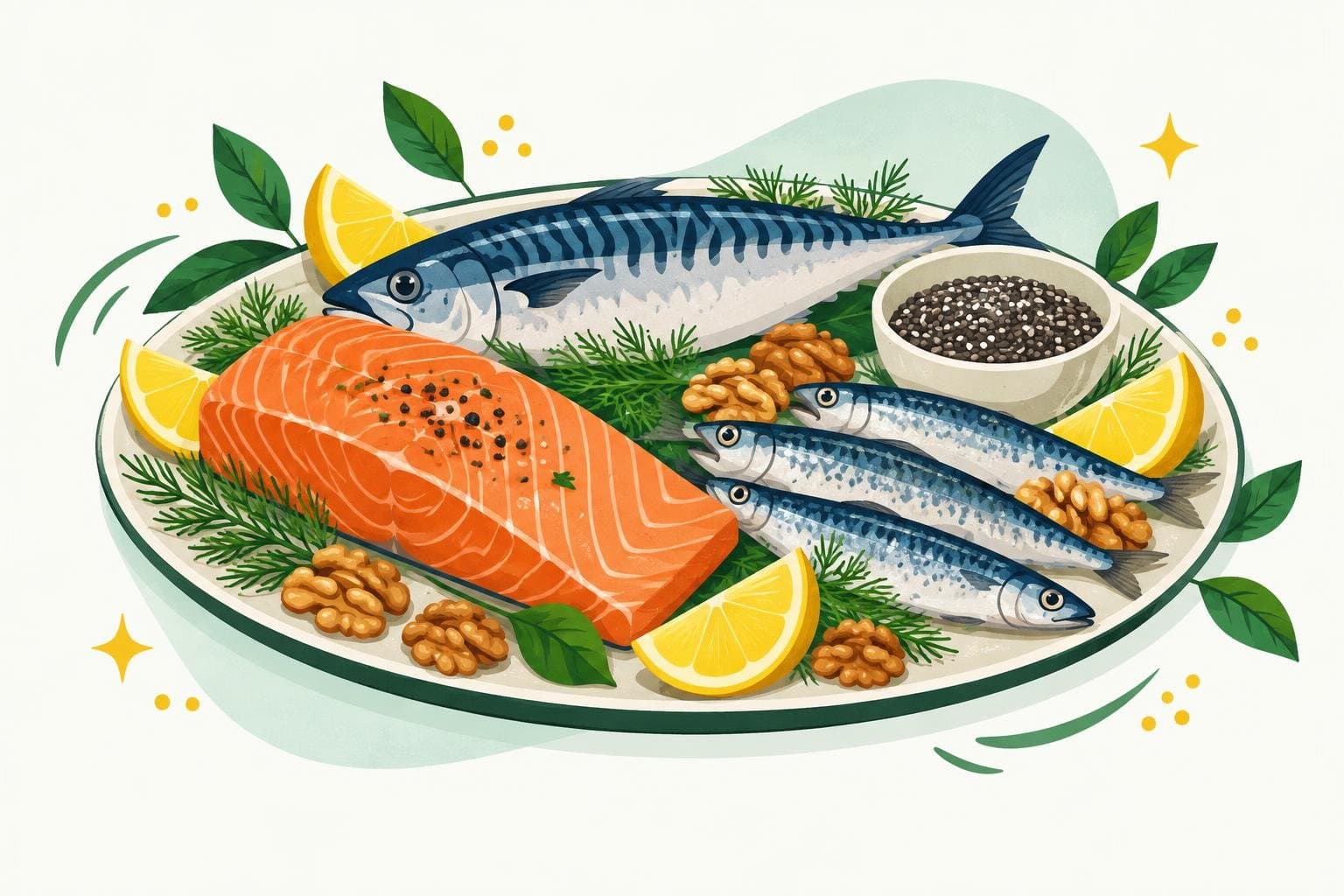
Omega-3s are a type of polyunsaturated fat your body can't make on its own. Oily fish like salmon, mackerel, sardines and trout are the richest source. Many health bodies recommend eating oily fish around once or twice a week. Walnuts, chia and flaxseed provide a plant form of omega-3, though the body converts it less efficiently.
Saturated fat: keep it moderate
Saturated fat is found mainly in fatty meat, butter, cheese, cream, coconut oil and many baked goods. Guidelines in many countries suggest keeping it to around 10% of daily calories or less. You don't need to avoid these foods; just let them be smaller parts of your diet.
Trans fats: avoid
Artificial trans fats, made by partially hydrogenating oils, are the least healthy fat of all. Many countries have restricted or banned them, but it's still worth checking labels for 'partially hydrogenated oil', especially on imported products.
Mind the portions
All fats carry about 9 calories per gram, more than twice protein or carbs. A tablespoon of olive oil is around 120 calories, so measure it rather than pouring freely. Mealful shows fat alongside protein and carbs for every recipe and every day you log, so you can see the balance at a glance.
This article is general information, not medical advice. If you have a health condition or specific dietary needs, talk to a doctor or registered dietitian.