Nutrition1 min read
How to eat more fibre (and why it matters)
Most people fall short on fibre. Simple swaps and additions that help you reach your daily target without overhauling your diet.
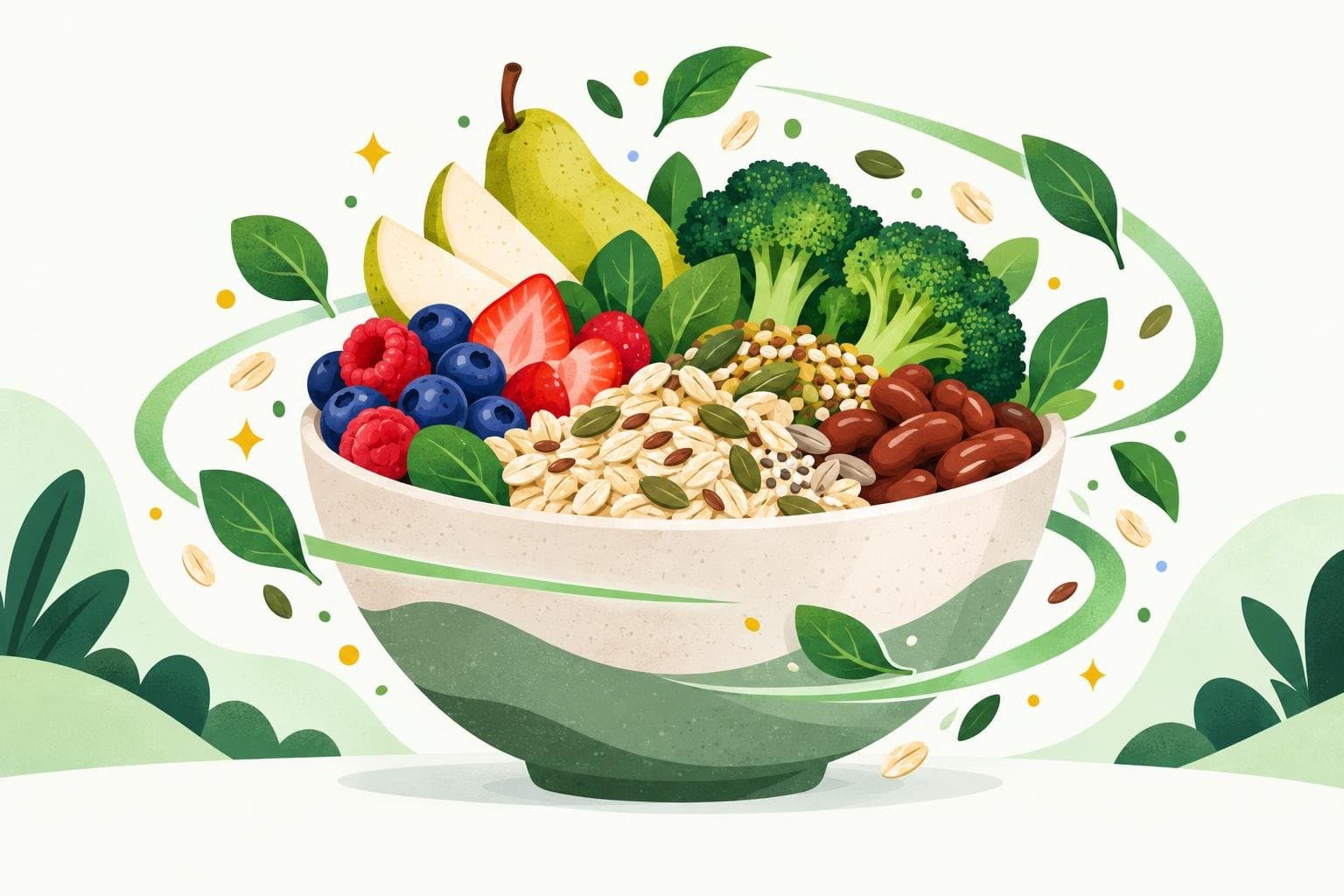
Fibre doesn't get the attention protein does, but it may be the nutrient most people are missing. It keeps digestion regular, helps you feel full, supports healthy cholesterol and blood sugar levels, and feeds the helpful bacteria in your gut.
How much do you need?
Guidelines vary by country, but most recommend roughly 25 to 38 grams a day for adults, and the UK sets its target at 30 grams. Surveys in many countries suggest most adults eat well below that.
Where fibre comes from
- Beans, lentils and chickpeas, some of the richest sources there are
- Whole grains: oats, brown rice, wholewheat bread and pasta, barley, quinoa
- Vegetables, especially peas, broccoli, carrots, artichokes and Brussels sprouts
- Fruit, particularly berries, pears, apples (with the skin) and oranges
- Nuts and seeds, including chia, flax and almonds
Easy ways to add more

- Swap white bread, rice and pasta for wholegrain versions
- Start the day with oats or a high-fibre cereal topped with berries
- Add a tin of beans or lentils to soups, stews, curries and salads
- Keep the skin on potatoes, apples and pears
- Snack on fruit, vegetable sticks with hummus or a handful of nuts
- Aim for vegetables to fill half your plate at lunch and dinner
Go slowly and drink water
If you eat very little fibre now, increase it gradually over a couple of weeks. A sudden jump can cause bloating and discomfort while your gut adjusts. Drinking enough water helps fibre do its job.
Fibre and fullness
Fibre-rich meals tend to be more filling for the same number of calories, which makes them a helpful tool if you're managing your weight. When you build plans in Mealful, recipes built on beans, whole grains and vegetables make it easier to hit your calorie goal without feeling hungry.
This article is general information, not medical advice. If you have a health condition or specific dietary needs, talk to a doctor or registered dietitian.